
What Does Not Belong Worksheets
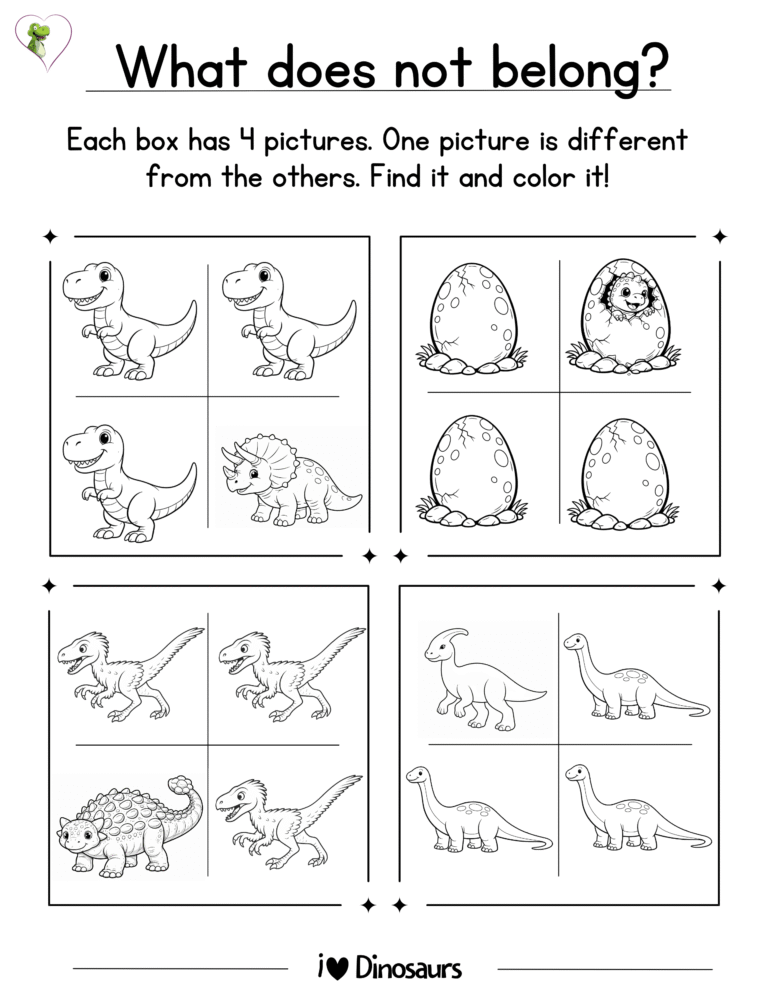
Help young learners practice sorting, comparing, and logical thinking with these dinosaur-themed what does not belong worksheets. Designed for preschool and kindergarten children ages 4–6, the activities encourage kids to look closely at a group of pictures, identify similarities, and decide which item does not fit with the others.
These worksheets give parents, teachers, and homeschool families a simple way to support early reasoning and visual discrimination skills. The dinosaur theme adds a playful element that can help keep children interested while they work through each activity at their own pace.
Take a look at the worksheet previews below.
⬇️ Explore the complete Dinosaur Worksheet Bundle
Over 300 printable PDF worksheets for preschool and kindergarten, including tracing, math, literacy, and coloring activities
Explore Bundle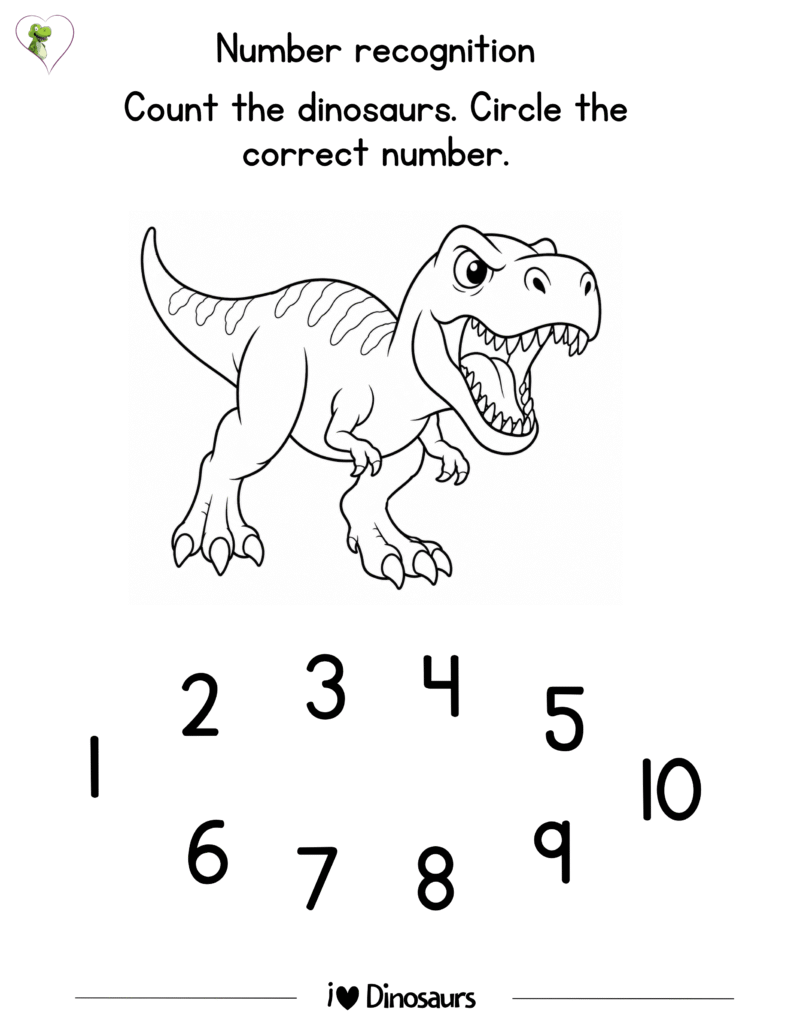

Why Kids Love Dinosaur Worksheets
Dinosaurs have a way of grabbing a child’s attention. Their unusual shapes, long tails, sharp teeth, horns, and other recognizable features give kids plenty of interesting details to notice. Adding dinosaurs to a what does not belong worksheet turns a simple learning activity into a playful challenge that feels more like solving a picture puzzle.
In these activities, children look at a group of images and figure out which one is different from the rest. To find the answer, they need to slow down, observe each picture, and compare what they see. One item might belong to a different category, have a different characteristic, or simply not follow the same pattern as the others.
This type of activity supports several important early learning skills. Children practice visual discrimination as they notice similarities and differences between pictures. They also build classification and sorting skills by thinking about which items belong together. Making a choice encourages logical reasoning, while staying focused on small visual details can strengthen attention and concentration.
For children ages 4–6, picture-based activities are especially approachable because they do not depend on advanced reading skills. Parents can use them for a quiet learning activity at home, teachers can include them in preschool or kindergarten lessons, and homeschool families can add them to early learning routines.
The dinosaur theme adds curiosity and imagination to the task, giving young learners a familiar and exciting reason to look closely, think carefully, and find the item that does not belong.
Free Dinosaur Worksheets
Children look closely at each group of dinosaur-themed pictures and identify the one that does not belong with the others. As they compare the images and make their choice, they practice visual discrimination, sorting, classification, and logical thinking. The activity also encourages careful observation and attention to detail, important early learning skills for preschool and kindergarten children ages 4–6.
Skills Practiced
A what does not belong worksheet encourages children to observe, compare, and make thoughtful decisions. These activities support several foundational skills that preschool and kindergarten children ages 4–6 can use across many areas of early learning.
Visual Discrimination
Children learn to notice differences and similarities between pictures. This helps them recognize important visual details such as shapes, features, and patterns.
Logical Thinking
Deciding which picture does not fit requires children to think about how the items are related and use that information to make a choice.
Classification
Children practice identifying shared characteristics and understanding why certain items belong in the same group.
Sorting Skills
Looking for the odd one out introduces the basic idea of organizing objects according to common features or categories.
Attention to Detail
Children need to examine each image carefully before choosing an answer. This encourages them to notice small but meaningful differences.
Focus and Concentration
Completing each picture challenge gives children practice staying focused on a specific task from beginning to end.
Comparing and Contrasting
Children consider how pictures are alike and how they are different. This skill supports early reasoning and helps them describe relationships between objects.
Problem-Solving
Each group presents a simple problem for children to solve. They gather visual information, consider the possibilities, and select the answer that makes the most sense.
Vocabulary Development
Talking about why an item does not belong gives children opportunities to describe what they see and use words related to categories, characteristics, and differences.
Decision-Making
Children practice making an independent choice based on the clues they observe. Explaining their reasoning can also help them become more confident in their decisions.
Ready for More Dinosaur Learning Fun?
Over 300 printable PDF worksheets for preschool and kindergarten covering tracing, math, literacy, and coloring activities.
View BundlesWays to Use Our Dino Sheets
A what does not belong worksheet can fit easily into different learning routines at school or at home. Since children practice observing, comparing, classifying, and making decisions, the activity can be used for both guided learning and independent practice. Parents, teachers, and homeschool families can choose a setting that matches each child’s needs, attention span, and daily schedule.
Classroom Morning Work
Start the school day with a focused visual thinking activity. Children can look at each group of pictures, compare the items, and identify which one does not belong. This gives preschool and kindergarten students a structured task to work on as they settle into the classroom and prepare for the day.
Literacy or Math Centers
Add the activity to a classroom center where children practice independently or with guidance. Although the task does not require advanced reading or math skills, comparing and classifying pictures supports early thinking skills that children use across subjects. Teachers can also encourage students to explain why they chose a particular picture.
Homeschool Lessons
Homeschool families can include these dinosaur worksheets in a preschool or kindergarten learning routine. Use them as a short activity between longer lessons or as part of a unit about sorting, categories, similarities, and differences. Asking children to explain their choices can add a simple conversation-based learning element.
Independent Practice
Once children understand the idea of finding the item that does not belong, they can work through the activity independently. This gives them an opportunity to practice careful observation and decision-making without needing constant instruction. Parents and teachers can review the answers afterward and discuss any choices that were challenging.
Activities for Early Finishers
Keep children engaged when they complete another classroom activity ahead of their classmates. An odd-one-out activity gives early finishers a clear task that encourages them to think carefully rather than simply wait. It can also provide extra practice with visual discrimination, classification, and logical reasoning.
Homework Practice
Use a worksheet as a simple learning activity for children to complete at home. Parents can ask their child to point out the item that does not belong and explain the reason for the choice. This turns the activity into a short discussion and gives children practice putting their observations into words.
Rainy Day Learning
Indoor days can still include meaningful learning without requiring a complicated setup. A dinosaur-themed visual activity gives children something focused to do while practicing observation and reasoning. Parents can sit alongside younger children and talk through each group of pictures, or let more confident learners work independently.
Summer Learning
Short activities can help children continue practicing early learning skills during the summer months. Finding which picture does not belong keeps children thinking about categories, similarities, and differences without feeling like a long lesson. Families can use the activity occasionally as part of a relaxed summer learning routine.
Quiet Time Activities
A picture-based thinking task can work well during quiet periods at home or in the classroom. Children can focus on examining the images and making their choices at their own pace. The activity encourages concentration and attention to detail while giving preschool and kindergarten children a clear task to complete.
Learning Stations
Include a what does not belong worksheet at a learning station focused on sorting, matching, or visual reasoning. Children can complete the activity as they rotate through different stations. Teachers can later ask students to share how they decided which item was different, encouraging them to explain their reasoning and use descriptive language.
More Dinosaur Learning Fun with Printable Worksheets
If your child enjoys activities like “What Does Not Belong?”, our dinosaur worksheet collection offers plenty of opportunities to keep learning with a theme they love. The printable worksheets are designed for young dinosaur fans and cover a variety of skills across math, reading, writing, and more.
With ready-to-print activities on hand, parents, teachers, and homeschool families can quickly choose a worksheet that fits the skill they want to practice. The collection also includes dinosaur coloring pages for a fun break between learning activities.
All worksheets come as an instant PDF download and feature a simple black-and-white design. This helps keep printing costs low, reduces visual distractions, and gives children plenty of opportunities to add their own colors to the pages.
Explore our printable dinosaur worksheets and find the right learning activities for your child.
Get the Complete Printable Dinosaur Collection
Over 300 printable PDF worksheets for preschool and kindergarten covering tracing, math, literacy, and coloring activities.
View Bundles8. FAQ
These activities are designed for preschool and kindergarten children, typically ages 4–6. At this age, children are developing skills such as visual discrimination, classification, comparing, and logical thinking. The picture-based format allows young learners to focus on finding similarities and differences without relying on advanced reading skills.
Children examine a group of pictures and decide which item is different from the others. This simple task encourages them to compare visual information, recognize shared characteristics, and identify differences. It can support early reasoning, classification, attention to detail, and problem-solving skills. Asking children to explain their choice can also encourage vocabulary development and verbal reasoning.
Yes. Teachers can use these activities with preschool and kindergarten students in several ways, including morning work, learning stations, independent practice, or activities for early finishers. They can also be included in lessons about sorting, classification, similarities, and differences. For additional discussion, teachers can ask students to explain why they think a particular picture does not belong.
Yes. Homeschool families can use these activities as part of preschool or kindergarten lessons focused on early reasoning and visual skills. They work well as short independent activities or as guided practice with a parent. Children can identify the picture that does not belong and then explain their reasoning, adding a useful discussion element to the activity.
Yes, the worksheets use mostly black-and-white images. This makes them practical for printing at home, in preschool or kindergarten classrooms, and in homeschool settings. The ink-friendly design is especially useful for teachers who need to print multiple copies for a class or regularly include printable activities in their lesson plans.
Printed pages can generally be laminated if you want to make them more durable for repeated handling. This may be useful in preschool and kindergarten classrooms or homeschool settings where the same activity is used more than once. Keep in mind that how children mark their answers will depend on the laminated surface and the writing materials you choose to use.
Many preschool and kindergarten children can work independently once they understand the basic task. A parent or teacher may want to complete the first example together by looking at each picture and discussing which one does not belong. After that, children can try the remaining activities on their own, depending on their age, confidence, and individual learning needs.
Instead of stopping after a child identifies the odd item, ask them to explain their choice. Questions such as “Why does this one not belong?” or “What do the other pictures have in common?” encourage children to describe similarities, differences, and categories. This simple conversation can extend the activity beyond visual recognition and support logical thinking, vocabulary, and verbal reasoning.
Yes. The worksheets are provided as printable PDF files, making them easy to download and print for use at home, in the classroom, or as part of a homeschool lesson. The PDF format makes it simple for parents and teachers to print the pages they need, including multiple copies for classroom activities or group learning.
Related Dinosaur Activities
After tracing practice, many children also enjoy:
Dinosaur Cutting Worksheets
Dinosaur Counting Activities
Dinosaur Letter Tracing