
Dinosaur Subtraction Worksheets for Kindergarten
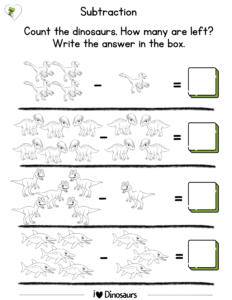
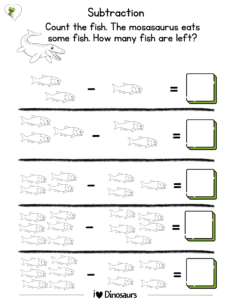
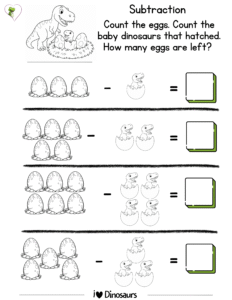
These dinosaur subtraction worksheets for kindergarten give young learners a playful way to practice early math skills. Designed for children ages 4–6 in preschool and kindergarten, the printable activities help introduce subtraction while keeping the practice connected to a fun dinosaur theme.
Parents can use the worksheets for learning at home, while teachers can add them to classroom math practice, independent work, or extra skill review. The activities give children another way to build confidence with basic subtraction at their own pace.
Below, you can download free worksheet previews from the full dinosaur worksheet bundle and try them before exploring the complete collection.
Just click the picture and download the printable PDF.
Explore The Complete Dino Bundle
⬇️ Explore the complete Dinosaur Worksheet Bundle
Over 300 printable PDF worksheets for preschool and kindergarten, including tracing, math, literacy, and coloring activities
Explore Bundle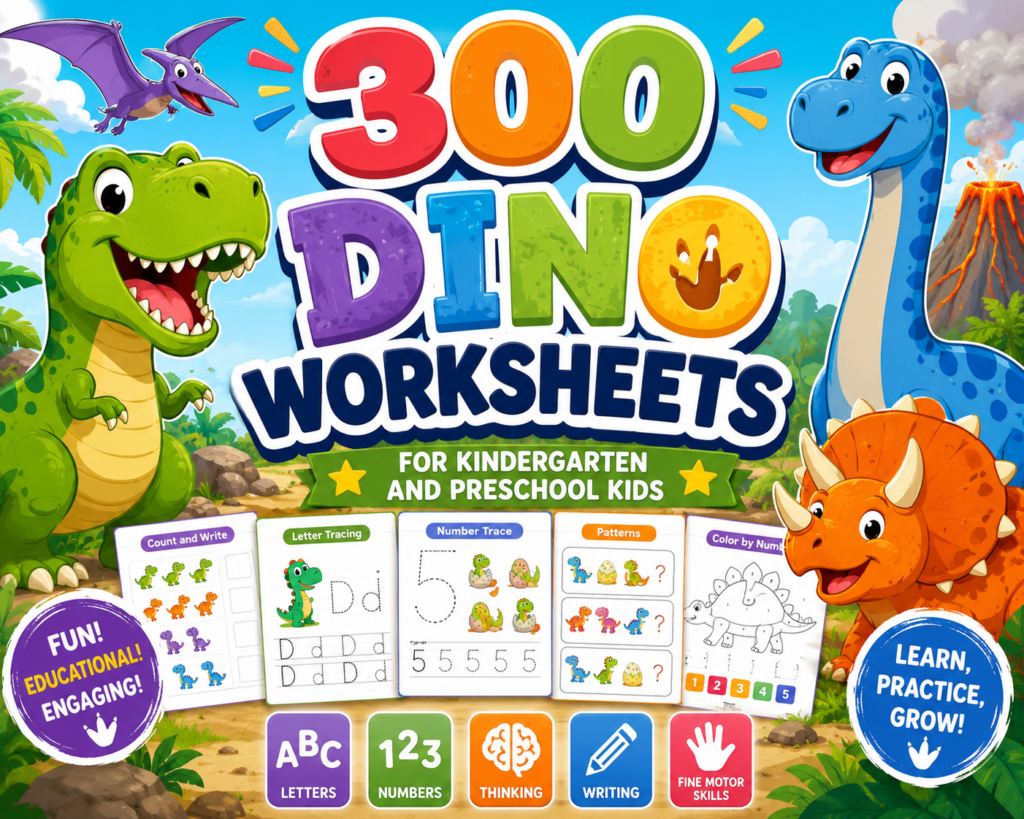
Want to keep the dinosaur learning going? The complete Dinosaur Worksheet Bundle includes 300 printable activities created for preschool and kindergarten learners ages 4–6.
The collection brings several early learning areas together in one dinosaur-themed resource. Children can practice early math, pre-writing, handwriting, early literacy, reading readiness, and fine motor skills while working with activities designed for their age group.
What’s Included in the Bundle?
The 300-page collection includes activities for:
Early math, including counting, number recognition, shapes, patterns, and basic problem-solving
Pre-writing, tracing, and pencil control
Letter recognition and phonics readiness
Handwriting development
Early literacy and reading readiness
Fine motor coordination
Visual discrimination
Dinosaur coloring and creative activities
The variety makes it easy to choose worksheets based on the skills a child is currently practicing rather than working through every page in order.
Made for Easy Printing and Flexible Learning
All worksheets use printer-friendly black-and-white designs. Children can focus on the activity and add their own colors to the dinosaur illustrations, while parents and teachers can print the pages they need without relying on color printing.
The bundle is provided as an instant digital download, so the worksheets can be printed and used for learning at home, preschool activities, kindergarten practice, homeschool lessons, learning centers, morning work, or extra skill review.
With 300 dinosaur-themed worksheets to choose from, the complete bundle provides plenty of opportunities to practice foundational skills while keeping a consistent theme that young dinosaur fans can enjoy.
Practicing Subtraction with Preschool and Kindergarten Children
Subtraction is one of the first arithmetic concepts young children begin to explore. Before working with more formal equations, children can learn what subtraction means by seeing a group of objects and taking some of them away.
Dinosaur-themed activities can make this idea easier to visualize. A child might start with a group of dinosaurs, remove a certain number, and then count how many are left. This connects the subtraction problem to something concrete and easy to understand.
Building Early Subtraction Skills
For children ages 4–6, subtraction practice can focus on understanding the basic idea of “taking away” and finding what remains. Counting skills are especially important because children often use counting to solve their first subtraction problems.
Short, repeated practice can help children become more comfortable with:
Counting objects accurately
Understanding “take away” and “how many are left”
Recognizing numbers
Connecting quantities with written numbers
Solving simple subtraction problems
Developing confidence with early math
Printable worksheets can be used alongside hands-on activities with toys, counters, blocks, or other familiar objects. Giving children different ways to explore the same math concept can help them build a stronger understanding of subtraction over time.
What age should children start learning subtraction?
Many children begin exploring simple subtraction concepts during preschool and kindergarten, usually around ages 4–6. At this stage, the focus can be on understanding what it means to take something away and figuring out how many objects remain. Children do not need to master written subtraction equations right away.
How do you teach subtraction to a kindergartener?
Start with objects a child can see and move. For example, place five toy dinosaurs on a table, take two away, and ask how many are left. Once the child understands the concept with physical objects, pictures and printable subtraction worksheets can provide additional practice.
Are subtraction worksheets suitable for preschool?
Simple subtraction worksheets can be suitable for preschool children who are already comfortable counting small groups of objects. Visual activities are especially helpful for beginners because children can count the objects before and after some are taken away. The difficulty should match the individual child’s current math skills.
How can I make subtraction fun for a 4- or 5-year-old?
Use familiar objects, toys, stories, and themes the child already enjoys. Dinosaurs can turn a basic subtraction problem into a small prehistoric story. You might start with six dinosaurs, have two “walk away,” and count the dinosaurs that remain. Keeping practice short and combining worksheets with hands-on activities can make early math feel more approachable.
What skills should children know before learning subtraction?
Basic counting and number recognition provide a useful foundation for subtraction. It also helps when children understand that numbers represent quantities and can compare small groups of objects. These early skills make it easier to understand what happens when objects are removed from a group.
Keep Learning with 300 Dinosaur Worksheets
Ready for More Dinosaur Learning Fun?
Over 300 printable PDF worksheets for preschool and kindergarten covering tracing, math, literacy, and coloring activities.
View Bundles Continue the dinosaur learning fun with 300 printable activities for preschool and kindergarten kids ages 4-6. The complete bundle covers early math, pre-writing, handwriting, early literacy, reading readiness, fine motor practice, and dinosaur coloring pages – all in printer-friendly black and white. Download the complete bundle and choose the activities that fit your child or classroom.
Frequently Asked Questions (FAQ)
Yes. Dinosaur worksheets can be used at home, in traditional classrooms, or as part of a homeschool lesson. They work well for independent practice, learning centers, quiet-time activities, extra practice, or simply adding some dinosaur-themed fun to a learning session.
Printable worksheets are easy to incorporate into everyday learning at home. They can be used for short practice sessions, rainy-day activities, quiet time, homework practice, or whenever your child wants something educational to do. Choosing activities that match your child’s current skills can help keep practice enjoyable rather than overwhelming.
Absolutely. Teachers can use printable dinosaur worksheets for morning work, learning centers, independent practice, early finishers, review activities, or as additional material during a dinosaur-themed lesson or unit.
Yes. Printable dinosaur activities can complement homeschool lessons across subjects such as math, reading, writing, and other foundational skills. They can be especially useful when you want a quick, ready-to-use activity without preparing an entire lesson from scratch.
Try combining worksheets with hands-on dinosaur activities. Children might use dinosaur figures as counting tools, color the dinosaurs after completing an activity, read a dinosaur book afterward, or earn a few minutes of dinosaur play when their learning activity is finished.
Not necessarily. Black-and-white worksheets are particularly convenient because they use less ink and allow children to color the illustrations themselves. This can turn a simple learning worksheet into an additional creative activity.
Start with the skill you want your child to practice rather than choosing solely by difficulty. For example, you might look for tracing, handwriting, counting, addition, reading, matching, or problem-solving activities. From there, choose an activity that provides an appropriate level of challenge without becoming frustrating.
Related Resources
Dinosaur Cursive Writing Worksheets
Dinosaur Letter Tracing Worksheets
Dinosaur Counting Worksheets
Dinosaur Fine Motor Activities
Dinosaur Printable Activities