
Dinosaur Comparing and Ordering Worksheets for Preschool and Kindergarten
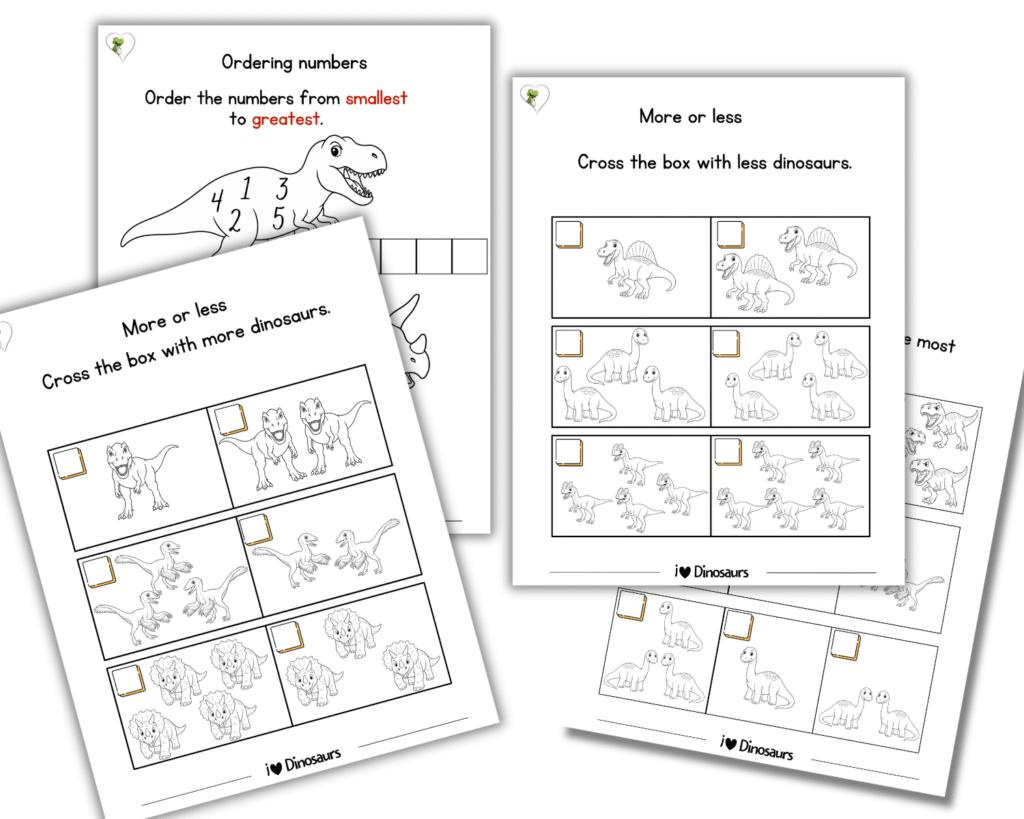
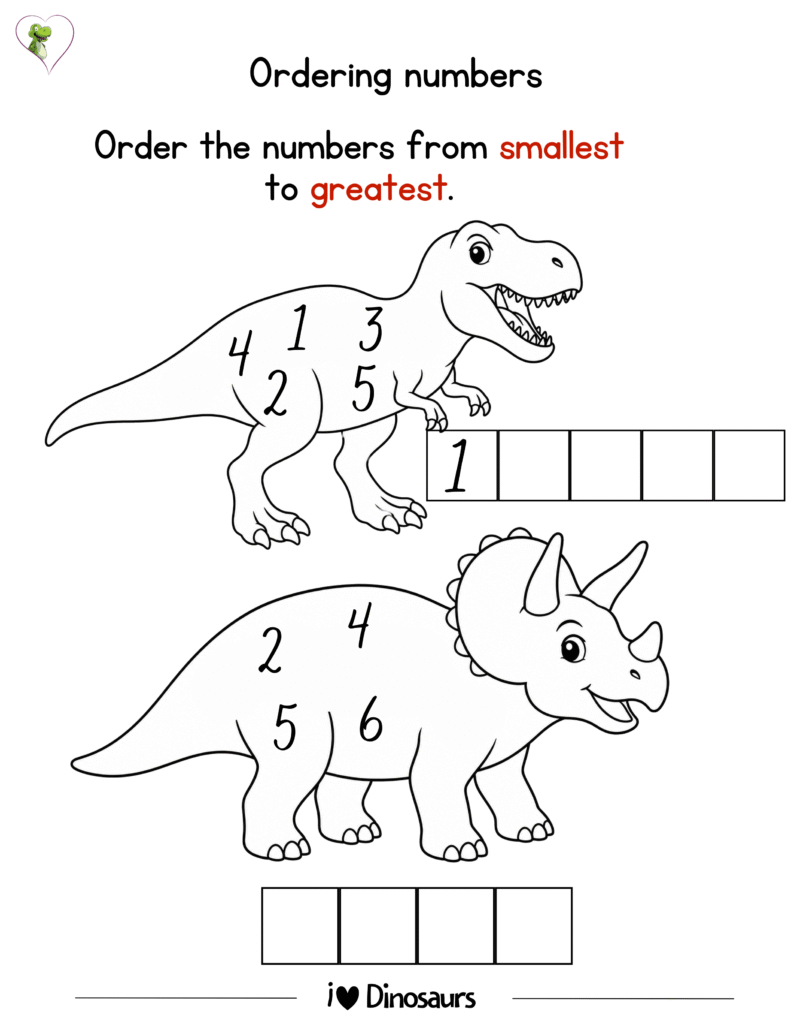
Learning to compare quantities and order numbers helps young children build a stronger understanding of number relationships. These dinosaur-themed worksheets give preschool and kindergarten children ages 4–6 practice counting groups of dinosaurs, comparing which group has more, fewer, or the same number, and putting numbers in order.
The activities can be used by parents for learning at home or by teachers as part of preschool and kindergarten math practice. They give children opportunities to strengthen counting, quantity comparison, and early number sense at their own pace.
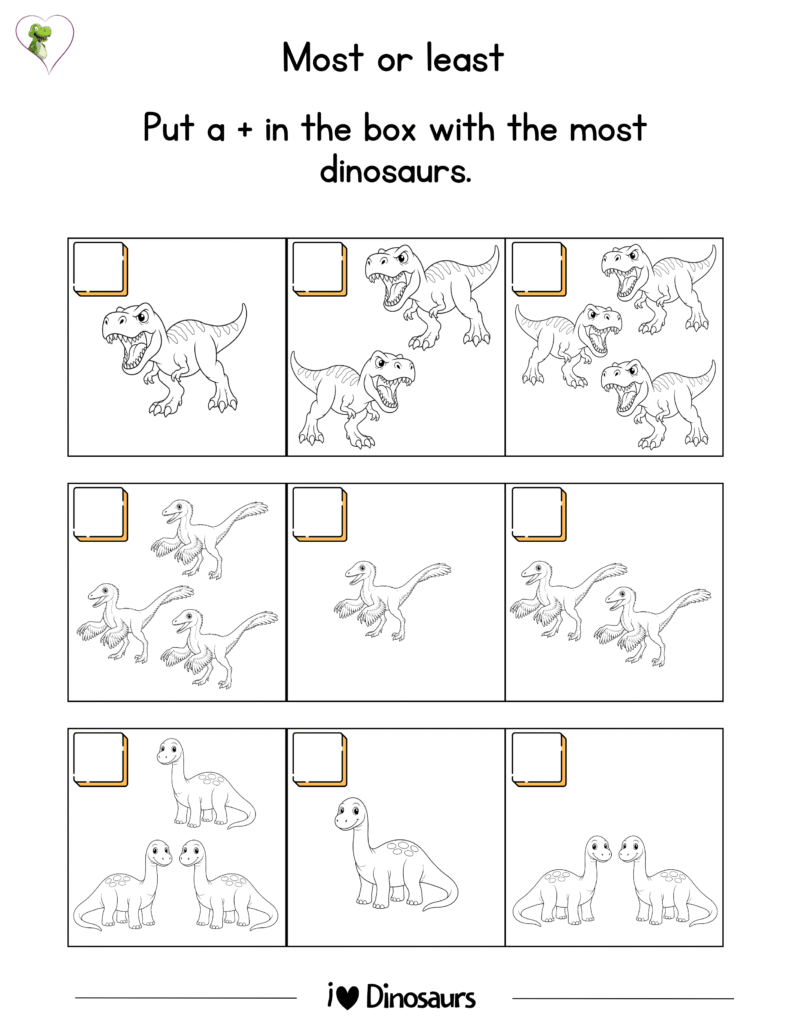
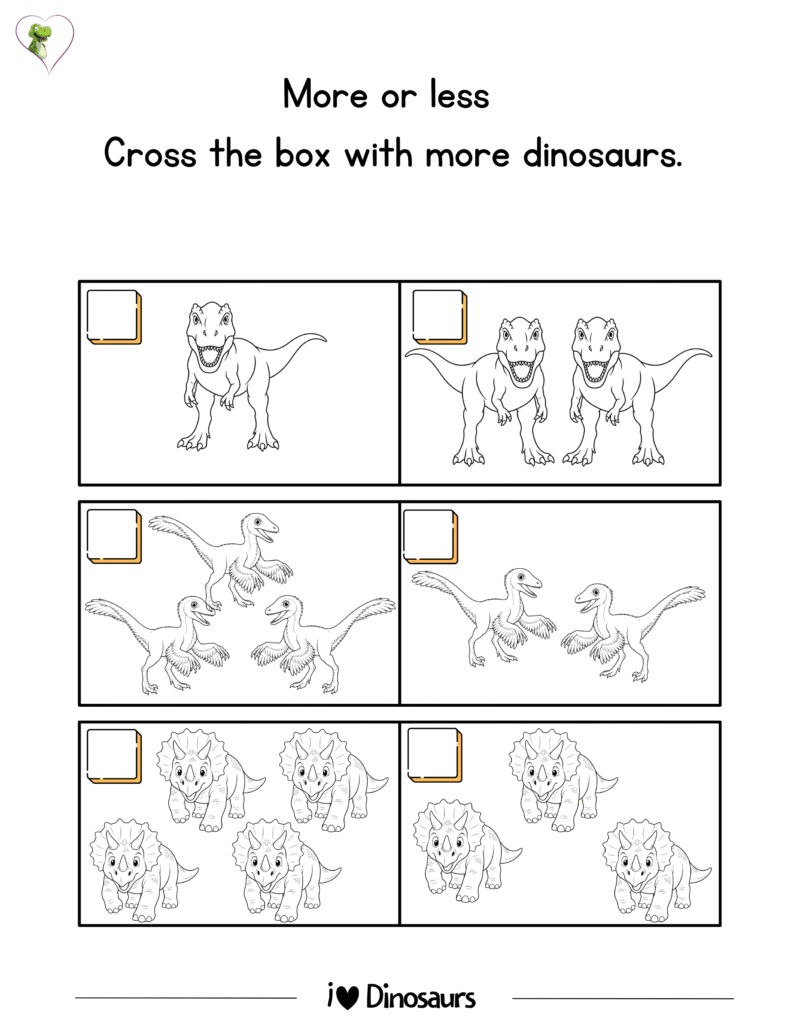
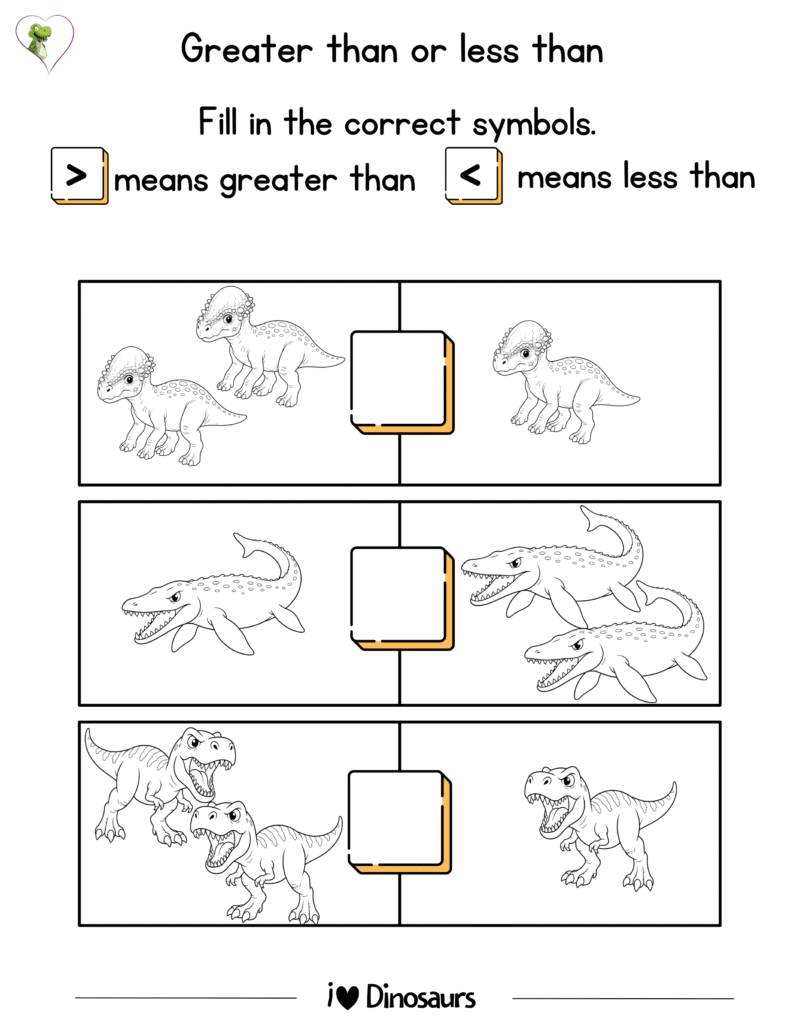
Explore the free printable worksheet previews below.
⬇️ Explore the complete Dinosaur Worksheet Bundle
Over 300 printable PDF worksheets for preschool and kindergarten, including tracing, math, literacy, and coloring activities
Explore Bundle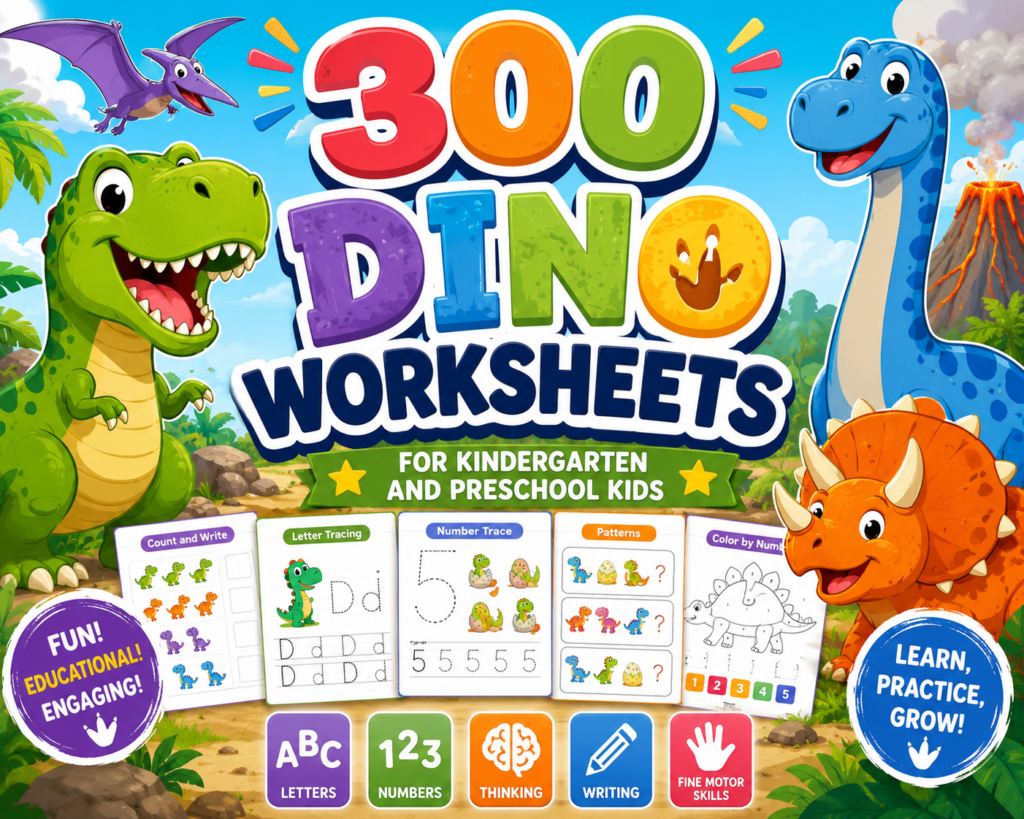
What Do Children Learn from Comparing and Ordering Numbers?
Comparing quantities and ordering numbers helps children understand how numbers and amounts relate to one another. By counting groups of dinosaurs and comparing them, children learn to recognize which group has more, fewer, or the same number. Ordering numbers helps them understand where numbers belong in a sequence.
For preschool and kindergarten children, practicing these skills supports early number sense and builds on their counting abilities. The dinosaur theme adds a familiar visual element to the activities while children work with quantities and number relationships.
Ways to Use These Worksheets at Home or in the Classroom
These dinosaur math worksheets can be used as part of regular number practice at home, in preschool, or in kindergarten. Parents can include them in short learning sessions, while teachers can use them to reinforce counting, comparing quantities, and ordering numbers introduced during math lessons.
At Home
Keep practice sessions short and let your child work at a comfortable pace. If a number comparison is difficult, talk through the numbers together before moving on.
In the Classroom
Use the worksheets for independent math practice, small-group activities, or additional practice with comparing and ordering numbers. They can also help teachers see which children may need more support with early number relationships.
Why Comparing and Ordering Numbers Matters
Learning numbers involves more than recognizing numerals and counting in order. Children also need to understand that numbers have different values and can be compared with one another.
Comparing numbers helps children develop a sense of greater and smaller quantities. Ordering numbers builds on that understanding by asking children to think about where numbers belong in relation to others.
These early skills are an important part of developing number sense in preschool and kindergarten. As children become more comfortable with number relationships, they build a foundation for later math skills such as addition and subtraction.
Comparing Numbers vs. Ordering Numbers: What’s the Difference?
Comparing and ordering numbers are closely related skills, but they ask children to think about numbers in slightly different ways.
Comparing Numbers
When children compare numbers, they decide how two numbers relate to each other. They learn to identify which number is greater, which is smaller, or whether two numbers have the same value.
Ordering Numbers
Ordering numbers means arranging several numbers according to their value. Children may put numbers in order from smallest to largest or from largest to smallest.
Practicing both skills helps preschool and kindergarten children become more confident with number relationships and strengthens their developing number sense.
Dinosaur Worksheets for Preschool and Kindergarten
Ready for More Dinosaur Learning Fun?
Over 300 printable PDF worksheets for preschool and kindergarten covering tracing, math, literacy, and coloring activities.
View Bundles The free worksheets on this page are a preview of the dinosaur-themed printable learning materials available in our shop.
Our Dinosaur Worksheets Bundle brings multiple preschool and kindergarten learning topics together in one downloadable collection for children ages 4–6.
If your child or students enjoy learning with dinosaurs, you can continue with the full printable bundle and explore the other activities included in the set.
- 300 printable worksheets
- Kindergarten & Preschool
- Math
- Literacy
- Tracing
- Coloring
- Black & White
- Instant Download
Frequently Asked Questions (FAQ)
Yes. Dinosaur worksheets can be used at home, in traditional classrooms, or as part of a homeschool lesson. They work well for independent practice, learning centers, quiet-time activities, extra practice, or simply adding some dinosaur-themed fun to a learning session.
Printable worksheets are easy to incorporate into everyday learning at home. They can be used for short practice sessions, rainy-day activities, quiet time, homework practice, or whenever your child wants something educational to do. Choosing activities that match your child’s current skills can help keep practice enjoyable rather than overwhelming.
Absolutely. Teachers can use printable dinosaur worksheets for morning work, learning centers, independent practice, early finishers, review activities, or as additional material during a dinosaur-themed lesson or unit.
Yes. Printable dinosaur activities can complement homeschool lessons across subjects such as math, reading, writing, and other foundational skills. They can be especially useful when you want a quick, ready-to-use activity without preparing an entire lesson from scratch.
Try combining worksheets with hands-on dinosaur activities. Children might use dinosaur figures as counting tools, color the dinosaurs after completing an activity, read a dinosaur book afterward, or earn a few minutes of dinosaur play when their learning activity is finished.
Not necessarily. Black-and-white worksheets are particularly convenient because they use less ink and allow children to color the illustrations themselves. This can turn a simple learning worksheet into an additional creative activity.
Start with the skill you want your child to practice rather than choosing solely by difficulty. For example, you might look for tracing, handwriting, counting, addition, reading, matching, or problem-solving activities. From there, choose an activity that provides an appropriate level of challenge without becoming frustrating.
Related Resources
Dinosaur Cursive Writing Worksheets
Dinosaur Letter Tracing Worksheets
Dinosaur Counting Worksheets
Dinosaur Fine Motor Activities
Dinosaur Printable Activities