
Dinosaur Vertical Addition for Kindergarten
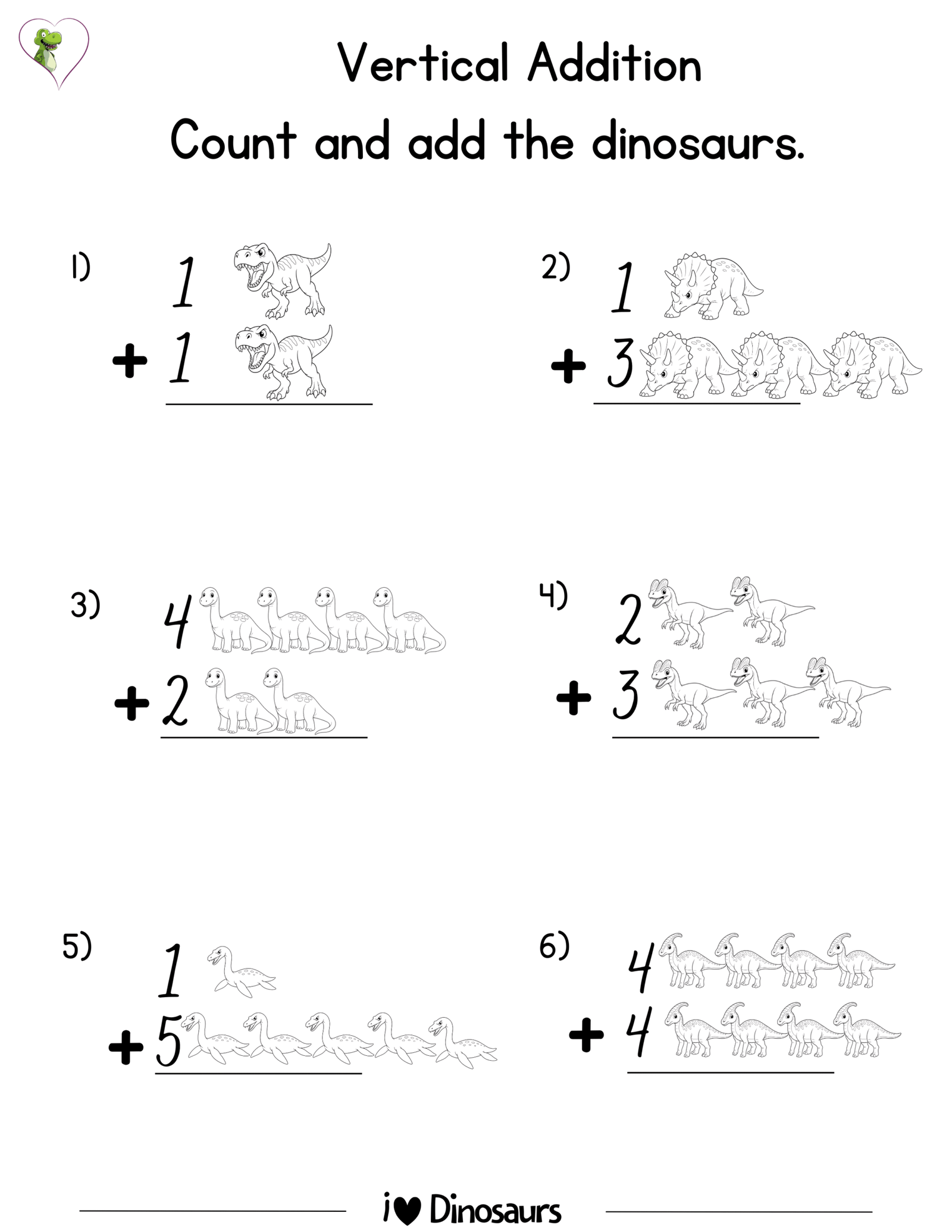
These dinosaur vertical addition worksheets for kindergarten give kids ages 4–6 a simple way to practice early addition while learning how numbers are arranged in vertical problems.
They are suitable for preschool and kindergarten children who are beginning to build basic addition skills and can be used at home or in the classroom.
The worksheets help kids become familiar with the vertical addition format while practicing simple math with a dinosaur theme.
The free printable worksheets on this page are previews from the full dinosaur worksheet bundle, so parents and teachers can try a few activities before choosing the complete set.
⬇️ Explore the complete Dinosaur Worksheet Bundle
Over 300 printable PDF worksheets for preschool and kindergarten, including tracing, math, literacy, and coloring activities
Explore Bundle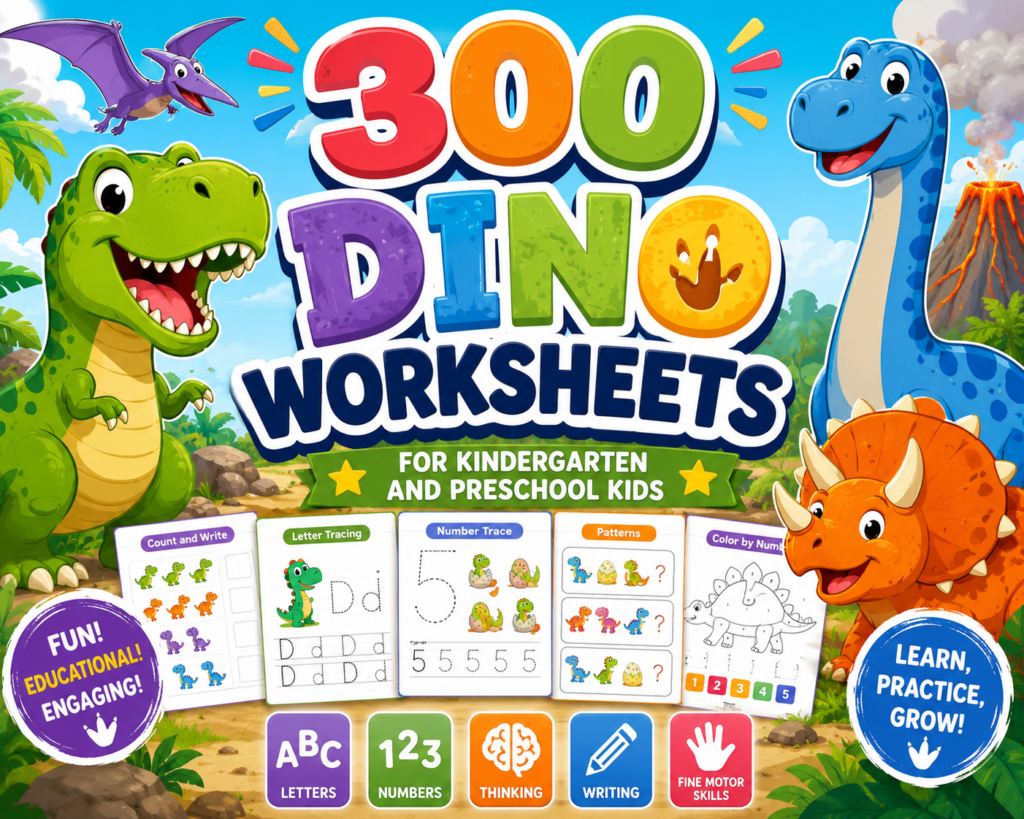
Want more dinosaur learning activities? The complete Dinosaur Worksheets for Preschool and Kindergarten bundle includes 300 printable worksheets created for children ages 4–6.
The collection brings several areas of early learning together in one dinosaur-themed resource. Children can practice early math skills, pre-writing, handwriting, letter recognition, phonics readiness, reading readiness, fine motor skills, and more.
Activities include counting, number tracing, shapes and patterns, line and shape tracing, alphabet practice, beginning sounds, matching activities, handwriting exercises, and dinosaur coloring pages.
All worksheets use printer-friendly black-and-white designs, making them easy to print for learning at home, preschool activities, kindergarten classrooms, homeschool lessons, learning centers, or extra practice.
The bundle is available as an instant digital download, so parents and teachers can choose and print the worksheets that match a child’s current learning needs.
300 Dinosaur-Themed Worksheets for Ages 4–6
Build early math, literacy, handwriting, fine motor, and kindergarten readiness skills with a large collection of printable dinosaur activities.
What Is Vertical Addition?
Vertical addition is a way of writing addition problems with the numbers stacked on top of each other instead of placing them side by side. Children learn to read the numbers from top to bottom and find the sum below.
For preschool and kindergarten learners, simple vertical addition activities can provide an early introduction to this math format. Starting with small numbers allows children to focus on understanding the arrangement of the problem while practicing basic addition.
Dinosaur vertical addition worksheets add a familiar theme to this early math practice. Kids can work on addition skills while becoming more comfortable recognizing and solving problems presented vertically.
Vertical Addition vs. Horizontal Addition
In horizontal addition, a problem is written across the page, such as 2 + 3 = 5. In vertical addition, the numbers are stacked:
2
+ 3
= 5
Seeing addition problems in both formats can help young learners recognize that the underlying math stays the same even when a problem is presented differently.
How to Introduce Vertical Addition to Young Learners
Keep the first vertical addition activities simple. Before using a worksheet, show the child how the two numbers are stacked and explain that the goal is still to find how many there are altogether.
Young learners may find it helpful to count real objects, fingers, or small toys before writing an answer. This connects the numbers on the page with an amount they can see and count.
Once the format becomes familiar, children can begin solving simple problems with less support. Short practice sessions work well for preschool and kindergarten learners because they allow children to focus on one new math concept at a time.
Try the Same Addition Problem Two Ways
Write a simple problem horizontally, such as 3 + 2, and solve it together. Then write the same problem vertically with 3 above 2.
Ask the child to solve both problems and compare the answers. This simple activity helps show that changing the way an addition problem is written does not change the sum.
Common Challenges When Learning Vertical Addition
Vertical addition introduces a new way of looking at math problems, so young learners may need some time to become familiar with the layout. A child who can solve 2 + 3 horizontally may not immediately recognize the same problem when the numbers are stacked.
Reading the Numbers in the Correct Order
At first, children may focus on the position of the numbers rather than the addition itself. Point out the plus sign and read the problem aloud together. This helps connect the vertical format with addition problems they already recognize.
Understanding That the Format Changes, Not the Math
Show the same problem horizontally and vertically. For example, write 4 + 2 in both formats and solve each one. The answer remains 6, even though the numbers are arranged differently.
Moving From Counting to Simple Addition
Counting objects or fingers can be useful when children are just beginning to add. As their number sense develops, encourage them to recognize and solve familiar addition problems without counting every item individually.
There is no need to rush this process. Regular practice with small numbers gives preschool and kindergarten learners time to understand both the addition concept and the vertical format.
When Are Kids Ready for Vertical Addition?
Children can begin exploring vertical addition once they understand that addition means combining quantities to find a total. They should also be comfortable recognizing and counting small numbers.
For preschool and kindergarten learners, the goal is not to master advanced written addition. Instead, simple problems can help children become familiar with seeing numbers stacked vertically and understanding what the plus sign tells them to do.
Some children may be ready to solve these problems independently, while others may still want to count with fingers or objects. Both approaches provide useful early math practice.
Start with small numbers and give children plenty of time to understand the format before moving on to more difficult addition problems.
Simple Vertical Addition Activities Without Worksheets
Worksheet practice can be combined with simple hands-on activities to help children understand vertical addition.
Write two small numbers vertically on a piece of paper and place the same number of dinosaur toys, blocks, or other small objects beside each number. Have the child count both groups and find the total.
You can also write a horizontal addition problem first and ask the child to rewrite it vertically. Solve both versions together and compare the answers.
Another simple activity is to leave the answer blank and let the child build each quantity with objects before finding the sum. This gives young learners a visual way to connect written numbers with actual quantities.
These activities can be repeated with different small numbers as children become more comfortable with the vertical format.
Keep Learning with 300 Dinosaur Worksheets
Ready for More Dinosaur Learning Fun?
Over 300 printable PDF worksheets for preschool and kindergarten covering tracing, math, literacy, and coloring activities.
View Bundles Continue the dinosaur learning fun with 300 printable activities for preschool and kindergarten kids ages 4-6. The complete bundle covers early math, pre-writing, handwriting, early literacy, reading readiness, fine motor practice, and dinosaur coloring pages – all in printer-friendly black and white. Download the complete bundle and choose the activities that fit your child or classroom.
Frequently Asked Questions (FAQ)
Yes. Dinosaur worksheets can be used at home, in traditional classrooms, or as part of a homeschool lesson. They work well for independent practice, learning centers, quiet-time activities, extra practice, or simply adding some dinosaur-themed fun to a learning session.
Printable worksheets are easy to incorporate into everyday learning at home. They can be used for short practice sessions, rainy-day activities, quiet time, homework practice, or whenever your child wants something educational to do. Choosing activities that match your child’s current skills can help keep practice enjoyable rather than overwhelming.
Absolutely. Teachers can use printable dinosaur worksheets for morning work, learning centers, independent practice, early finishers, review activities, or as additional material during a dinosaur-themed lesson or unit.
Yes. Printable dinosaur activities can complement homeschool lessons across subjects such as math, reading, writing, and other foundational skills. They can be especially useful when you want a quick, ready-to-use activity without preparing an entire lesson from scratch.
Try combining worksheets with hands-on dinosaur activities. Children might use dinosaur figures as counting tools, color the dinosaurs after completing an activity, read a dinosaur book afterward, or earn a few minutes of dinosaur play when their learning activity is finished.
Not necessarily. Black-and-white worksheets are particularly convenient because they use less ink and allow children to color the illustrations themselves. This can turn a simple learning worksheet into an additional creative activity.
Start with the skill you want your child to practice rather than choosing solely by difficulty. For example, you might look for tracing, handwriting, counting, addition, reading, matching, or problem-solving activities. From there, choose an activity that provides an appropriate level of challenge without becoming frustrating.
Related Resources
Dinosaur Cursive Writing Worksheets
Dinosaur Letter Tracing Worksheets
Dinosaur Counting Worksheets
Dinosaur Fine Motor Activities
Dinosaur Printable Activities