
Dinosaur Number Tracing Worksheets
Printable Tracing Number Worksheets with Dinosaurs
Help young learners practice number formation with a theme that keeps early math engaging. These dinosaur number tracing worksheets give children a simple way to build pencil control, recognize numbers, and become more comfortable writing them. They are suitable for preschool and kindergarten children ages 4–6, whether they are learning at home, working in a classroom, or getting extra handwriting practice with a parent or teacher. The familiar tracing format supports focused, independent practice while allowing children to work at their own pace.
Take a look at the worksheet previews below.
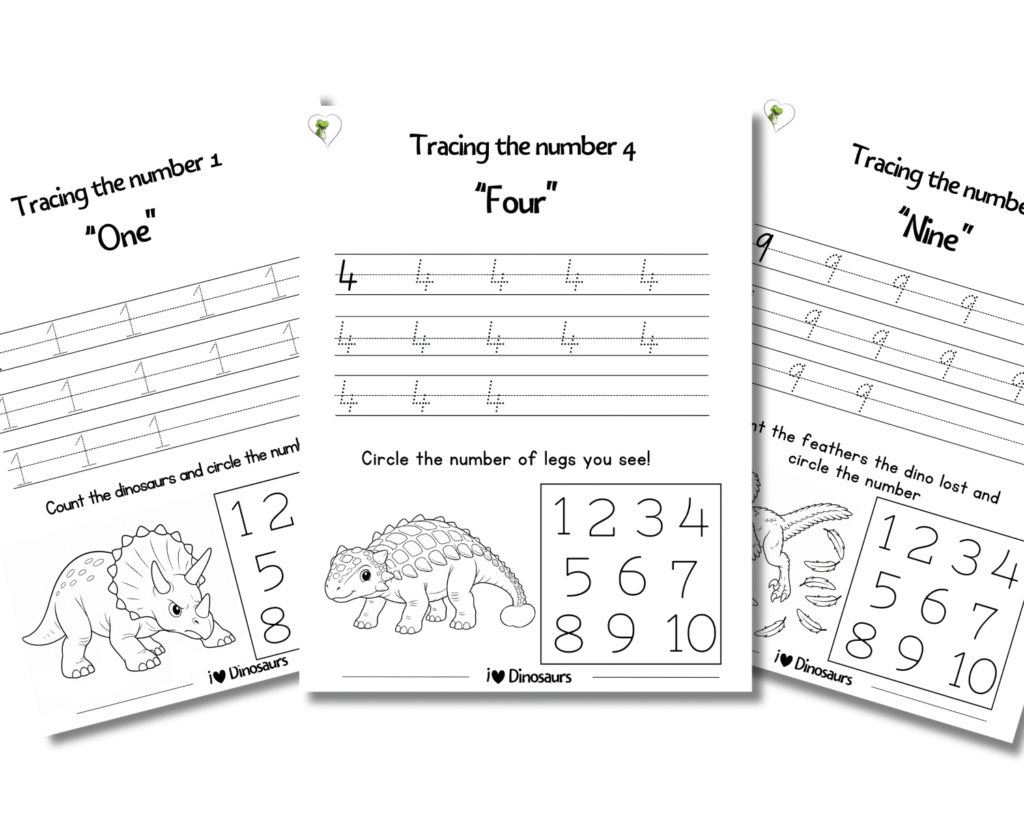
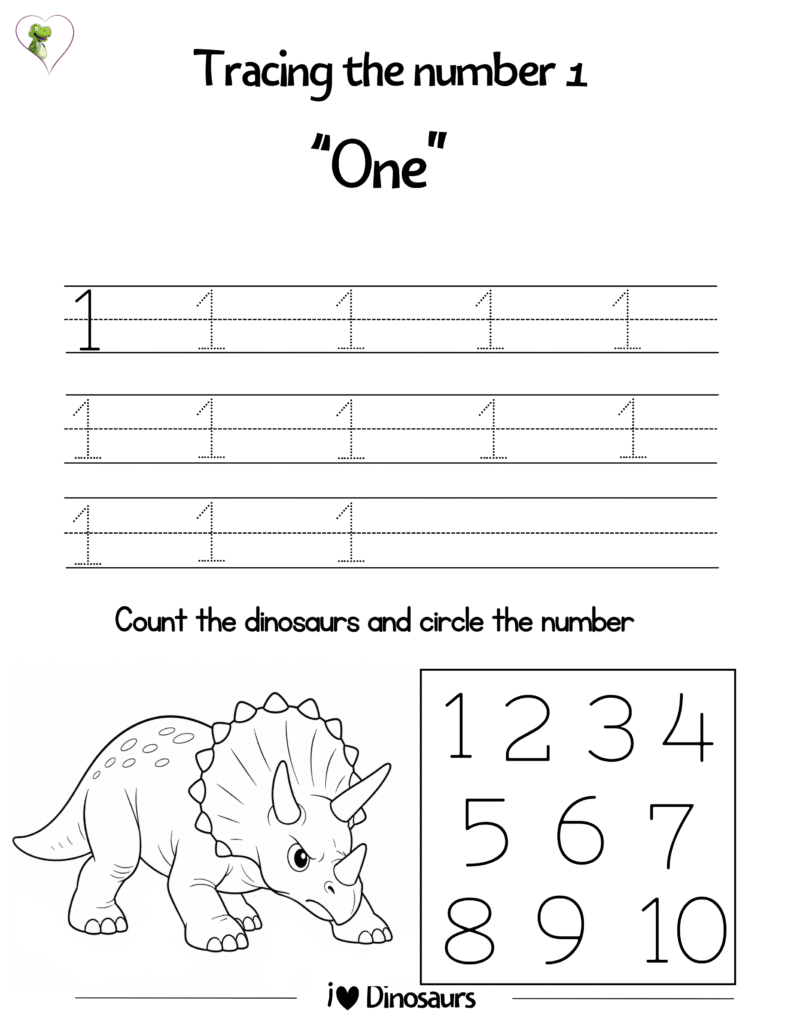
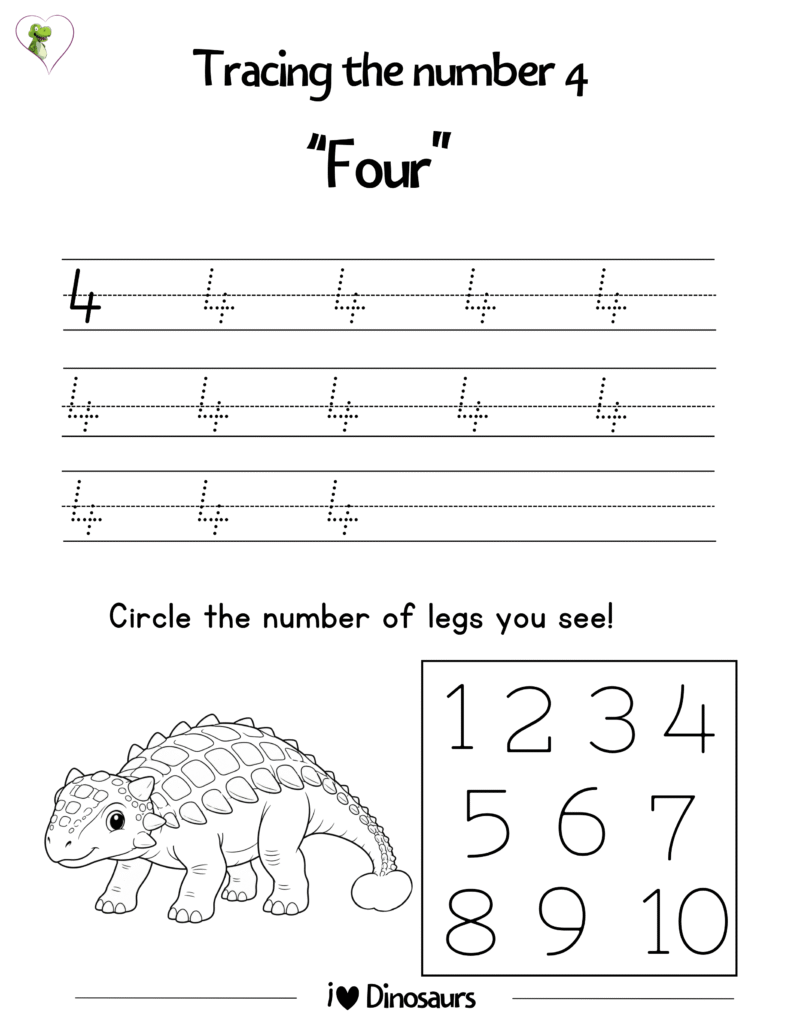
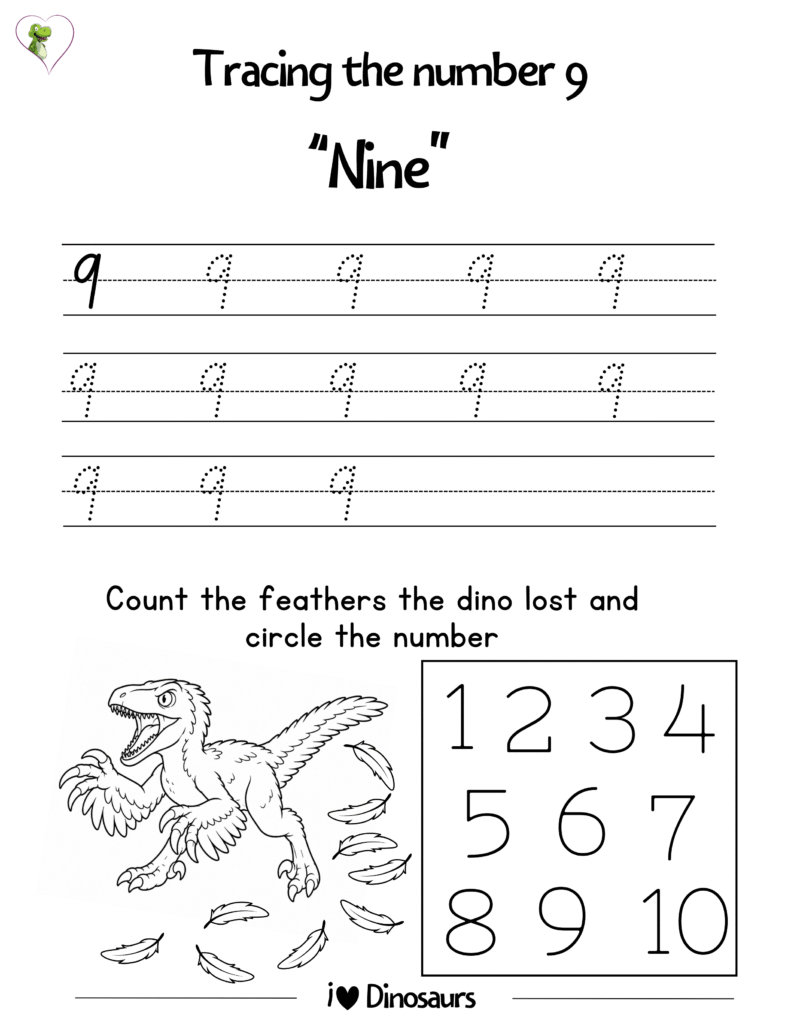
⬇️ Explore the complete Dinosaur Worksheet Bundle
Over 300 printable PDF worksheets for preschool and kindergarten, including tracing, math, literacy, and coloring activities
Explore BundleWhy Kids Love Dinosaur Tracing Activities
Tracing Numbers with Dinosaurs turns a familiar early-learning activity into something children are curious to explore. Many preschool and kindergarten children already recognize dinosaurs from books, toys, and museum visits. Seeing them on a worksheet can make number practice feel more inviting and give children a clear reason to sit down, pick up a pencil, and begin.
Number tracing helps children learn how each numeral is formed. Following the lines encourages them to notice where a number starts, which direction the pencil should move, and how its curves and straight lines fit together. Repeating these movements can strengthen number recognition and help children remember the difference between numerals with similar shapes.
The activity also supports fine motor development. Children practice controlling a pencil, applying steady pressure, and coordinating what they see with the movements of their hands. These skills are important for writing numbers, forming letters, drawing, and completing other classroom tasks.
For parents, dinosaur tracing pages offer a focused activity that can be used during short learning sessions at home. Teachers can include them in math centers, morning work, or handwriting practice. Homeschool families can use the worksheets to introduce number formation or reinforce skills from a current math lesson.
The dinosaur theme adds interest without changing the purpose of the activity. Children still receive structured practice, but the illustrations make each page feel less repetitive. This balance of visual interest and guided tracing can help young learners stay engaged long enough to complete the task carefully.
Explore our Dinosaur Worksheet bundle for Kindergarten
Trace the T-Rex
Children trace the lines that form the T-Rex, following each path carefully from start to finish. The activity helps develop pencil control, hand-eye coordination, and attention to direction. It also gives young learners practice making controlled movements they will use when forming numbers and letters.
Trace Dinosaur Eggs
On this worksheet, children trace dinosaur egg outlines while practicing smooth, steady pencil movements. Following the rounded lines supports fine motor development and helps children become more comfortable with curved strokes. These movements prepare their hands for writing numerals and lowercase letters with rounded shapes.
Trace Fossil Lines
Children follow the fossil-themed lines without moving their pencils away from the tracing paths. This focused activity strengthens visual tracking, precision, and control. It also encourages children to slow down and notice changes in direction—an important skill when they begin forming more complex letters and numbers independently.
Trace Footprints
Young learners trace dinosaur footprints along the page, moving from one print to the next. The activity gives them practice following a sequence and guiding their pencils in a clear direction. It supports concentration, hand-eye coordination, and the left-to-right movement used in early reading and writing.
Trace Volcano Shapes
Children trace the shapes shown in the volcano-themed activity and pay attention to their outlines. This helps them recognize basic forms while practicing straight, curved, and angled pencil strokes. Shape tracing also builds spatial awareness and prepares children to identify the lines and curves found in written numbers.
Continue exploring the complete collection to discover more dinosaur-themed tracing activities for early learners.
Skills Practiced
Tracing activities support several areas of early development at the same time. As children follow lines, shapes, and paths, they strengthen the physical, visual, and thinking skills needed for early writing and classroom learning.
Pencil Control
Children practice guiding a pencil along a defined path. This helps them make more deliberate marks and stay within boundaries.
Fine Motor Strength
Holding and moving a pencil activates the small muscles in the hands and fingers. Stronger hand muscles make writing, drawing, cutting, and fastening clothing easier.
Hand-Eye Coordination
Children coordinate what they see with the movements of their hands. This connection helps them trace more accurately and complete other visual-motor tasks.
Visual Tracking
Following a line from its starting point to its end teaches the eyes to move steadily across a page. This skill also supports early reading and copying.
Number Formation
Guided tracing introduces the strokes and movement patterns used to write numerals. Repetition helps children remember where to begin and which direction to move.
Number Recognition
Regular exposure to written numerals helps children identify and distinguish them. This creates a foundation for counting and early math activities.
Shape Recognition
Tracing outlines helps children notice curves, corners, straight edges, and basic forms. Recognizing these features supports both geometry and handwriting development.
Spatial Awareness
Children learn to judge position, distance, and direction on a page. They also become more familiar with concepts such as above, below, beside, and between.
Concentration
Completing a tracing path requires children to focus on one movement at a time. Short, structured activities can help extend their attention gradually.
Following Directions
Children practice beginning at a clear starting point and completing a task in order. This supports their ability to follow routines and multistep classroom instructions.
Ready for More Dinosaur Learning Fun?
Over 300 printable PDF worksheets for preschool and kindergarten covering tracing, math, literacy, and coloring activities.
View Bundles5. Ways to Use Dinosaur Tracing Worksheets
Number tracing can fit into many parts of a child’s day without requiring a long lesson or complicated setup. The activities can introduce number formation, reinforce skills children have already practiced, or provide focused fine motor work. Parents and teachers can select a page that matches the child’s current needs and offer help with pencil grip or tracing direction when necessary.
Classroom Morning Work
Place a tracing page at each child’s seat before the school day begins. Children can work on it while classmates arrive and settle in. This creates a calm, predictable routine while providing useful practice with pencil control, number formation, and following visual paths.
Literacy or Math Centers
Add the pages to a literacy center for prewriting practice or a math center focused on number recognition and formation. Give children a clear task, such as tracing each number carefully before naming it. This keeps the activity purposeful and easy for children to complete with limited assistance.
Homeschool Lessons
Use one page as a short warm-up before a handwriting or early math lesson. A parent can demonstrate the correct tracing movement first and then let the child practice independently. Keeping the activity brief makes it easier to include in a regular homeschool routine without overwhelming a young learner.
Independent Practice
Offer a familiar tracing page after children understand how to follow the lines. Independent work gives them time to apply pencil-control skills at their own pace. Check the completed page afterward and discuss one specific success, such as careful tracing or starting each number in the correct place.
Activities for Early Finishers
Keep several tracing pages in an accessible classroom folder for children who finish another assignment early. Teach them how to choose a page and begin without interrupting the class. This provides a structured option that reinforces useful skills instead of simply filling time.
Simple Homework Practice
Send home one page when children need additional practice with tracing or number formation. Explain the goal clearly so parents know whether to focus on pencil grip, tracing direction, or numeral recognition. A single page keeps the assignment manageable for preschool and kindergarten children.
Rainy Day Learning
Use tracing as a quiet table activity when bad weather keeps children indoors. It requires minimal preparation and can help create a calmer transition between more active indoor games. Adults can sit nearby to talk about the numbers and dinosaur images while children work.
Summer Skill Review
Include short tracing sessions in a relaxed summer routine to help children maintain early writing habits. One page occasionally is enough to revisit pencil control and number formation without making summer feel like a regular school day. Follow the activity with reading, drawing, or outdoor play.
Quiet Time Activities
Offer a tracing page during quiet time when a child needs a focused activity that does not involve screens or noisy materials. Choose a comfortable workspace with a pencil and a flat writing surface. The clear paths give children a specific task they can complete calmly.
Rotating Learning Stations
Make tracing one part of a small set of learning stations. Children might move from tracing to counting objects, looking at books, or another familiar classroom task. Keep directions consistent and allow enough time for careful work so children do not rush to reach the next station.
Continue Learning with the Complete Dinosaur Worksheet Collection
If your child or class enjoys dinosaur-themed tracing, the complete collection offers an easy way to continue practicing without preparing activities from scratch. These dinosaur worksheets for kindergarten are also suitable for preschool children ages 4–6 who are developing early pencil and number-writing skills.
The ready-to-use pages save preparation time for parents, teachers, and homeschool families. Simply download the files, choose the pages that match your lesson, and print what you need.
Main Features
- 100s Dinosaur-themed learning activities
- Practice with pencil control, number formation, lines, and shapes
- Activities featuring a T-Rex, dinosaur eggs, fossils, footprints, and volcano shapes
- Suitable for preschool and kindergarten children ages 4–6
- Useful for early math, handwriting, and fine motor practice
- Instant download for convenient access
- Black-and-white, printer-friendly design
The collection can support classroom lessons, homeschool routines, independent practice, or short learning sessions at home. Explore the complete dinosaur worksheet collection and choose the activities that best support your young learner.
Get the Complete Printable Dinosaur Collection
Over 300 printable PDF worksheets for preschool and kindergarten covering tracing, math, literacy, and coloring activities.
View Bundles8. FAQ
These activities are designed for preschool and kindergarten children, typically ages 4–6. At this age, children are developing skills such as visual discrimination, classification, comparing, and logical thinking. The picture-based format allows young learners to focus on finding similarities and differences without relying on advanced reading skills.
Children examine a group of pictures and decide which item is different from the others. This simple task encourages them to compare visual information, recognize shared characteristics, and identify differences. It can support early reasoning, classification, attention to detail, and problem-solving skills. Asking children to explain their choice can also encourage vocabulary development and verbal reasoning.
Yes. Teachers can use these activities with preschool and kindergarten students in several ways, including morning work, learning stations, independent practice, or activities for early finishers. They can also be included in lessons about sorting, classification, similarities, and differences. For additional discussion, teachers can ask students to explain why they think a particular picture does not belong.
Yes. Homeschool families can use these activities as part of preschool or kindergarten lessons focused on early reasoning and visual skills. They work well as short independent activities or as guided practice with a parent. Children can identify the picture that does not belong and then explain their reasoning, adding a useful discussion element to the activity.
Yes, the worksheets use mostly black-and-white images. This makes them practical for printing at home, in preschool or kindergarten classrooms, and in homeschool settings. The ink-friendly design is especially useful for teachers who need to print multiple copies for a class or regularly include printable activities in their lesson plans.
Printed pages can generally be laminated if you want to make them more durable for repeated handling. This may be useful in preschool and kindergarten classrooms or homeschool settings where the same activity is used more than once. Keep in mind that how children mark their answers will depend on the laminated surface and the writing materials you choose to use.
Many preschool and kindergarten children can work independently once they understand the basic task. A parent or teacher may want to complete the first example together by looking at each picture and discussing which one does not belong. After that, children can try the remaining activities on their own, depending on their age, confidence, and individual learning needs.
Instead of stopping after a child identifies the odd item, ask them to explain their choice. Questions such as “Why does this one not belong?” or “What do the other pictures have in common?” encourage children to describe similarities, differences, and categories. This simple conversation can extend the activity beyond visual recognition and support logical thinking, vocabulary, and verbal reasoning.
Yes. The worksheets are provided as printable PDF files, making them easy to download and print for use at home, in the classroom, or as part of a homeschool lesson. The PDF format makes it simple for parents and teachers to print the pages they need, including multiple copies for classroom activities or group learning.